The protected library
Śrīla Prabhupāda’s books, lectures, letters, and conversations remain the source of truth, with their structure, language, and citations preserved.
VedaBase OS is a private study and research environment built around Śrīla Prabhupāda’s teachings. Read the source, follow a question, develop understanding in your own words, and prepare work you can share responsibly.
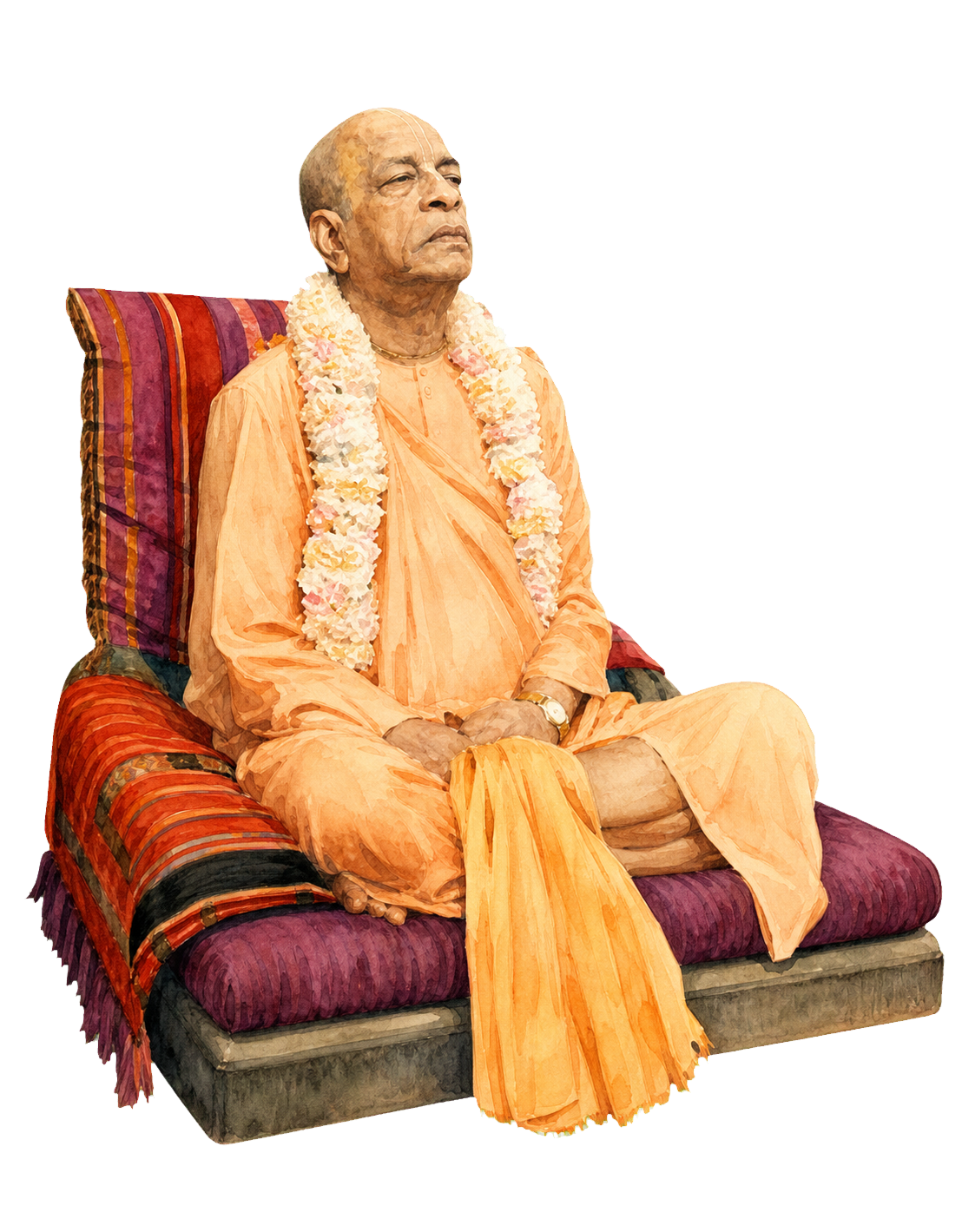
“All students should be encouraged to write some article after reading Srimad-Bhagavatam, Bhagavad-gita and Teachings of Lord Caitanya. They should realize the information, and they must present their assimilation in their own words. Otherwise, how they can become preachers?”Śrīla Prabhupāda · Letter to Brahmānanda · July 1, 1969
Begin with a text, ask a question, keep what matters, and develop your understanding in your own words. The original source stays with you throughout.
Browse books, letters, lectures, and conversations in the way each was originally arranged. Open the text, translation, purport, and nearby sections. Every quotation stays linked to its source.
A devotee creates a private Project for one question and returns to it over several weeks. Readings, reflections, and unanswered questions remain together.
Atma can help with the research. The devotee still has to understand, decide, and speak.
Atma is being designed as a carefully governed agentic system—not an open-ended chatbot. Its sources, permissions, memory, and actions are limited by explicit safety and security rules.
Source first.
Guardrails always.
The devotee decides.
Atma may retrieve only from the verified, approved VedaBase corpus of Śrīla Prabhupāda’s teachings.
It cannot browse the web or consult outside material. It is not allowed to use a model’s general knowledge as evidence.
Every answer about the teachings must open back to the exact source text and citation that supports it.
Atma does not fill gaps or create spiritual conclusions. If the corpus does not support an answer, it says so plainly.
The library stays read-only. Nothing enters your notes, writing, memory, or teaching until you choose it.
The recovered library is read-only. Search results, personal notes, and agent suggestions can never become part of Śrīla Prabhupāda’s original words.
Search can help you find relevant places in the teachings, but only the source itself carries authority. Every result must lead back to the text in context.
Your notes, Projects, writing, conversations, and preferences stay separate from the library and under your control.
Śrīla Prabhupāda’s books, lectures, letters, and conversations remain the source of truth, with their structure, language, and citations preserved.
Word and meaning-based search help locate the relevant source text. They can be rebuilt, checked, or removed without changing the books.
Notes, highlights, Projects, writing, conversations, and approved memory belong to you and remain separate from the corpus.
Atma receives only the approved source text and private context needed for the task. It cannot browse the internet, rewrite the library, or freely change what it remembers.
At the foundation is a recovered multilingual library with exact hierarchy, citations, and source evidence. Search, Projects, and Atma are built around that library—not above it.
Move from a question to the exact source text, read it in context, and understand why each source matters.
Keep readings, notes, questions, reflections, and source collections together as your study develops over time.
Develop a class, article, study guide, or research note in your own voice, with every quotation and citation close at hand.
One continuous place to read, question, compare, remember, write, and prepare service—without losing the source.
Śrīla Prabhupāda’s books, lectures, letters, and conversations remain intact, searchable, and linked to exact citations.
Questions, notes, reflections, and source collections stay together in private Projects.
Atma can find, compare, explain, and check only what the approved teachings support.
Develop a class, article, study guide, or research note in your own voice with every source close at hand.
Not a chatbot beside the books.
A trusted study system built around them.
VedaBase OS keeps the whole journey together: Śrīla Prabhupāda’s teachings, your questions and notes, your growing understanding, and the work you prepare for others.
Return to the journey